
BIOMECHANICAL PODIATRY – RELIEF OF OSTEOARTHRITIS OF THE HIP – ALICANTE
Hip osteoarthritis: we relieve the overload from the foot, complement to your orthopedist
Biomechanical study of gait – Compensation of dysmetry – Custom insoles that unload the joint – Coordination with the medical team that already treats you.

Specialists since 1979
Clinic founded in 1979
Podiatrists specialized since 1979 in lower limb biomechanics and MIS foot surgery in the center of Alicante.
Certification MIS23BE03 – ABMSP
European pioneers certified by the American Board of Multispecialty in Podiatry in minimally invasive surgery of the foot.
Multilingual service
We attend you in Spanish, English, German, French and Dutch. Center nº 5357 of the Health Registry of the Valencian Community.
What is osteoarthritis of the hip and what is the role of podiatry?
Osteoarthritis of the hip (coxarthrosis) is the progressive degeneration of the cartilage of the coxofemoral joint. When this cartilage loses thickness, the bony surfaces become closer together, groin or lateral pain, morning stiffness and limitation when climbing stairs or putting on shoes appear. It is one of the most prevalent forms of osteoarthritis in people over 55 years of age: various studies indicate that it affects between 5% and 10% of the general population.
The main diagnosis, follow-up and treatment of osteoarthritis of the hip corresponds to the orthopedic surgeon or rheumatologist: they are the ones who confirm the radiological grade, prescribe medication, intra-articular infiltrations or, in advanced cases, indicate the prosthesis. Our role as podiatrists is different and complementary: we study whether your stride and gait are adding unnecessary load to an already diseased hip. If they are, we can unload it with custom insoles and dysmetry compensation.
We want to be very clear: podiatry does not cure osteoarthritis of the hip or replace the prosthesis when indicated. What we can do is alleviate biomechanical overload, improve walking comfort and, in some cases, delay or attenuate symptomatic progression. We always work in coordination with the medical team already treating you.
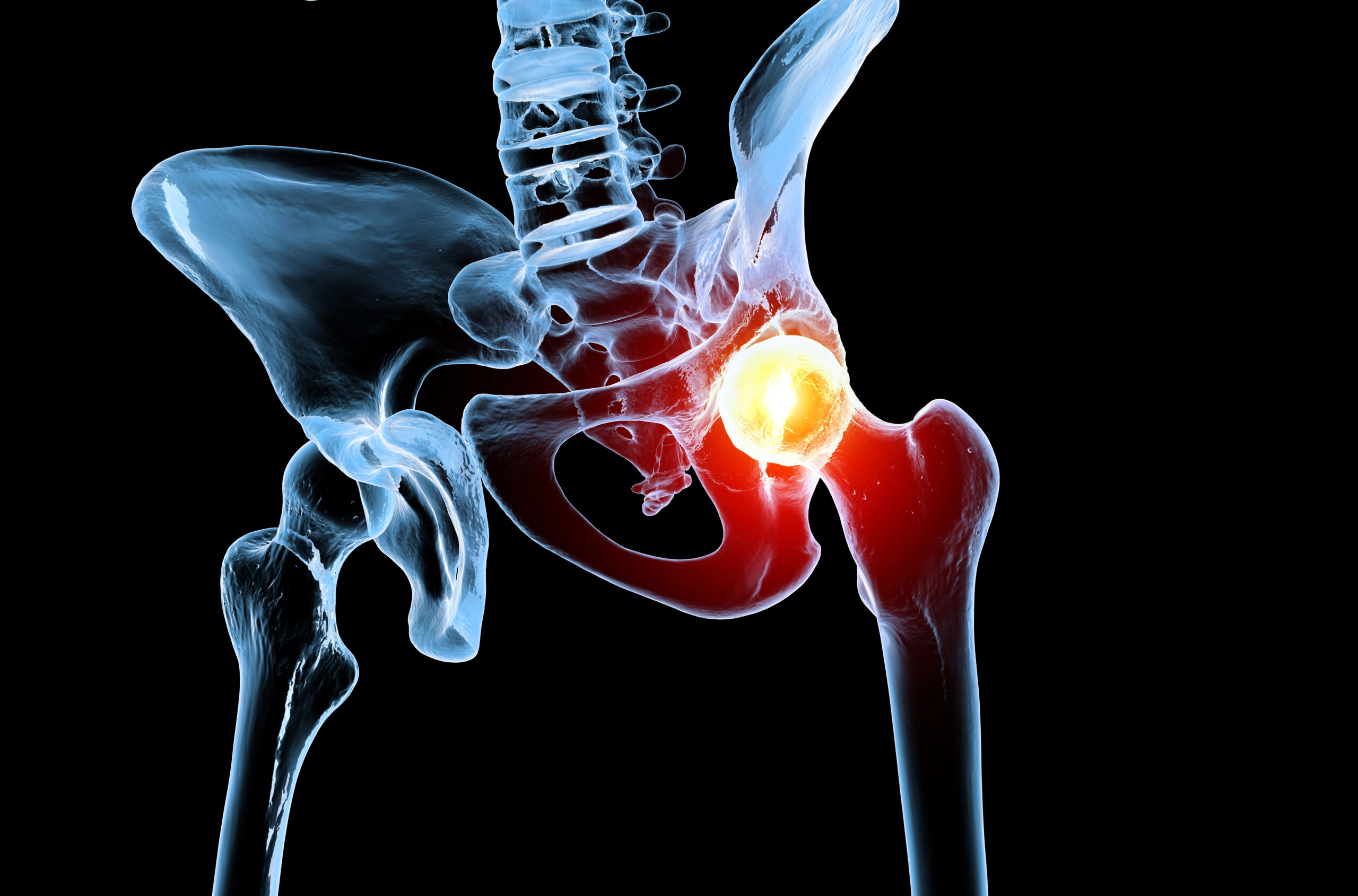
Symptoms: how does osteoarthritis of the hip manifest itself?
The picture of osteoarthritis of the hip is progressive. It usually begins as a vague groin discomfort after a lot of walking and, over time, it settles down to limit everyday gestures. These are the most frequent symptoms that motivate consultation:
- Deep groin pain (in the groin), which may radiate to the anterior aspect of the thigh or knee.
- Lateral pain in the greater trochanter (external aspect of the hip), especially when lying on the affected side.
- Morning stiffness of less than 30 minutes, which improves when starting up.
- Pain when going up and down stairs and getting up from a low chair.
- Difficulty in putting on socks and shoes (limitation of internal rotation).
- Lameness or claudication after walking a certain distance.
- Crunching or clicking sounds in the joint when moving it.
- Apparent shortening of the affected limb in advanced stages.
Why does osteoarthritis of the hip appear and what factors can we modulate from the foot?
Hip osteoarthritis has a multifactorial cause: age, genetics, overweight, traumatic antecedents, congenital dysplasias and biomechanical factors. Podiatry cannot act on non-modifiable factors, but it can intervene on biomechanical factors:
⚖️ Lower limb dysmetry
A leg length difference of more than 5-8 mm shifts the center of gravity and forces the hip on the longer side to bear a greater load with each step. Compensation with progressive rise redistributes the load and, according to several studies, significantly reduces pain in selected patients (Khosravi M et al., Prosthet Orthot Int 2022).
🦶 Altered footprint modifying the mechanical axis
Excessive pronation or collapse of the rearfoot in valgus rotates the tibia inward and modifies the mechanical axis of the lower limb. This rotation is transmitted to the hip and generates unphysiological moments of force on the coxofemoral joint. Correcting the footprint with plantar orthoses is a real lever.
🦴 Non-biomechanical factors.
Age, genetic predisposition, congenital hip dysplasia, history of trauma, overweight (each extra kilo multiplies the load on the hip), rheumatic diseases and prolonged workload. These are factors on which podiatry does not act directly, but which should be mentioned because they make up the whole picture.
Biomechanical diagnosis: how we assess your osteoarthritis of the hip from the foot
Our scan does not diagnose osteoarthritis. What we do is quantify the biomechanical component that is adding load to an already diseased joint:
🔍 Clinical examination with previous trauma report
The first appointment starts with your trauma report and your loaded hip x-ray. We explore limb length, pelvic tilt, hip rotations, rearfoot alignment and static stride. If we detect recent non-concordant changes, we communicate this to the medical team before proceeding.
📊 Biomechanical study of gait and gait.
We performed a dynamic study on a treadmill with a pressure platform. We measured stance times of each foot (painful hips usually have a shortened stance phase due to antalgic unloading), pressure distribution, step length and symmetry. We recorded lateral and posterior video to analyze pelvic tilt.
📷 Analysis with pressure platform
The plantar pressure platform gives us a numerical map of the static and dynamic load distribution, which we compare against reference standards. It is the objective image that allows us to explain to you – and to share with your orthopedic surgeon – why we propose a certain type of insole.
Podiatric treatment of osteoarthritis of the hip: conservative stepwise protocol.
All our approach is conservative and biomechanical. We do not perform surgery on the hip. Our goal is to relieve overload, improve walking comfort and complement the therapeutic plan you have already established with your medical team.
1 Custom insoles with dysmetria compensation
The first step is always the customized insole, made from the 3D foot mold and the biomechanical report. In osteoarthritis of the hip we prioritize two elements: progressive compensation of the dysmetry (when it exists) and absorbent elements in the heel that reduce the impact in each step. If your stride requires it, we add rearfoot corrections and forefoot offloading. Review at 4-6 weeks.
2 Shoe fitting, gait reeducation and shock waves
When the insole improves but is not enough, we also adjust the footwear (rocker sole that reduces the hip extensor moment, stable buttress) and work on gait reeducation in coordination with your physiotherapist. If there are secondary enthesopathies (trochanteritis, gluteal tendinopathy), we apply shock waves (ESWT) in the affected area.
3 MIS foot surgery IF there is underlying deformity worsening gait
Only in patients in whom there is a structural foot deformity (severe painful bunion, hallux rigidus, fixed claw toes) that is demonstrably altering gait and aggravating hip overload. MIS surgery is performed under local anesthesia, millimeter incisions and immediate ambulation. Important: this surgery does not operate on the hip or “cure” osteoarthritis. Its objective is to restore a more physiological gait.

Comparison of biomechanical options in osteoarthritis of the hip.
| Criteria | Custom template | Generic insole | MIS corrective foot surgery | Medical management only (no podiatry) |
|---|---|---|---|---|
| Indication | Arthrosis with documented dysmetry and/or altered footprint. | Mild cases without biomechanical study | Forefoot deformity that alters the gait in patients with coxarthrosis | Arthrosis without relevant biomechanical component |
| Invasiveness | Null (external device) | Null | Minimal (millimeter incisions) | Null |
| Anesthesia | No anesthesia required | Not required | Local | Not required |
| Time to comfort improvement | 4-8 weeks | Variable, no guarantee | 3-6 months postoperative | According to traumatologist’s guidelines |
| Documented efficacy | Pain reduction in selected patients (Khosravi M et al., Prosthet Orthot Int 2022). | Limited and not individualized | High on foot deformity; side effect hip relief | Effective when there is no modulable biomechanical component |
Source: Khosravi M et al, Prosthet Orthot Int 2022 (primary citation in coxarthrosis); Reilly KA et al, Knee 2006 (general endorsement). Podiatry does not cure osteoarthritis or replace medical management or prosthetics when indicated. Individual results may vary.
Why choose Clínica San Román as a podiatric complement?
Complement, not substitute
We always work with your orthopedic surgeon. We do not interfere in your plan: we complement it from the biomechanics of the foot.
Objectively measurable improvement
Pressure platform before and after. If there is no change, we say so. Data sharable with your medical team.
Non-invasive approach first
Insoles, footwear and re-education. We only consider MIS surgery if there is a foot deformity that justifies the gesture.
family experience since 1979
Podiatrists trained since 1979 specifically in lower limb biomechanics and kinetic chain pathology.
Accurate dysmetry compensation
We calculate the rise with teleradiography and apply it progressively. Gradual adaptation, without surprises for the hip.
Multilingual and accessible service
Spanish, English, German, French and Dutch. Accessible center in the heart of Alicante.
Habits that reduce the overload on your osteoarthritic hips
👟 Suitable footwear
Shoe with a rocker sole, firm counter, wide last and moderate drop. Avoid completely flat shoes or shoes with high heels. Replace shoes when you notice the sole is sunken or asymmetrical.
🏃 Adapted physical activity
Movement is your best ally, but choose the right one: swimming, exercise bike, Nordic walking with poles. Avoid prolonged running on asphalt, impact sports and long uphill routes. Walk daily for manageable distances without pain.
⚖️ Realistic weight management
Each kilo less saves 3 to 4 kg of load on your hips with each step. We are not looking for drastic changes: small adjustments sustained over time give results far superior to aggressive diets.
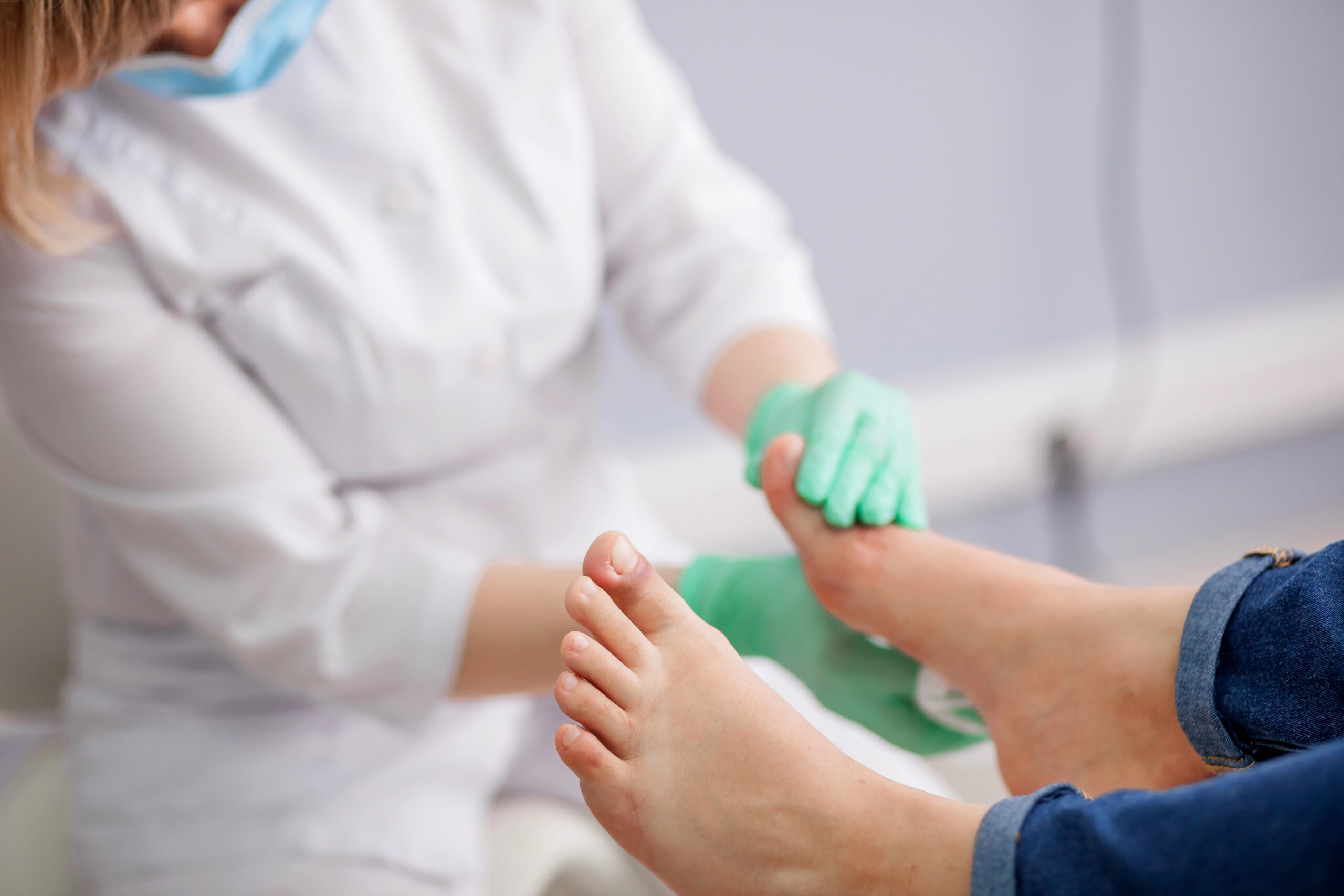
Do you have osteoarthritis of the hip and the pain does not go away?
Your feet may be adding load without anyone having assessed it yet. We invite you to a free evaluation: we measure, analyze and honestly explain what we can – and cannot – add to the plan you already have with your orthopedic surgeon.
Request your free evaluationFrequently asked questions on hip osteoarthritis and biomechanical podiatry
We solve the most common doubts of our patients.
🔬 About the pathology.
Can the feet influence osteoarthritis of the hip?
Yes, although they do not directly cause it. The osteoarthritic hip is a fragile joint that receives abnormal loads when there is dysmetria, pronation or forefoot deformities that alter gait. This overload accelerates pain and stiffness. Several studies indicate that well-indicated compensating insoles reduce pain in selected patients. They do not treat osteoarthritis per se, but alleviate the modulable biomechanical component.
Do insoles cure osteoarthritis?
No. Osteoarthritis is a degeneration of the articular cartilage and, to date, no conservative treatment can reverse it. What custom insoles do do in selected patients is relieve pain, improve walking comfort and unload the joint, which can attenuate symptomatic progression.
Does the podiatrist’s treatment replace that of the orthopedic surgeon?
Not at all. The orthopedic surgeon is and will continue to be your specialist of reference for the hip: he diagnoses, makes the radiological follow-up, prescribes medication or intra-articular infiltrations and, if the time comes, indicates the prosthesis. We complement this work from the foot. We work in coordination, not in parallel.
What is dysmetria compensation?
Dysmetria is a difference in length between the two legs. When it exceeds 5-8 mm, it systematically overloads the hip on the longer side. The compensation consists of adding a rise calculated by millimeters in the insole of the short foot, in a progressive way so that your body adapts without new tensions.
🏥 Treatment
In which cases do insoles provide the most relief?
The best results are obtained in patients with mild to moderate osteoarthritis (Kellgren-Lawrence grades 1-3) in whom there is a clear biomechanical component: documented dysmetria, marked pronation or significant forefoot deformity. In advanced osteoarthritis with surgical indication, insoles can improve comfort while preparing for surgery.
Does MIS bunion surgery improve the hip?
Indirectly, yes, in selected patients. If your arthritic hip is suffering because you walk “loaded to the outside edge” to avoid the pain of the bunion, correcting the bunion with MIS surgery restores a more physiologic gait and reduces the rotational overload on the hip. The bunion is not operated on to treat the hip: it is operated on because there is a symptomatic bunion with its own indication.
When do I need prostheses and the podiatrist stops working?
The indication for prosthesis is given by your orthopedic surgeon when the pain is disabling, the quality of life is severely affected and conservative treatments no longer provide sufficient relief. Until then, podiatry can accompany the entire process. After the prosthesis, we can also help you by adapting insoles to re-educate your gait and protect the contralateral hip.
🏃 Recovery and prevention
How long does it take to notice improvement?
The body needs a period of adaptation to the insole and to the compensation of dysmetry. The first 1-2 weeks you may experience arch or lumbar discomfort: this is normal. The improvement in hip comfort usually begins between the fourth and eighth week, and consolidates after 2-3 months.
Can I continue walking if I have advanced osteoarthritis?
Yes, and you should. Movement, within the limits of pain, keeps the joint lubricated and the stabilizing musculature active. What changes is how you walk: pain-free distances, appropriate footwear, unloading insole, regular terrain, avoiding long slopes. Nordic walking with poles is excellent because it reduces the load on the hip.
Scientific references
- Khosravi M, Babaee T, Daryabor A. Effect of foot orthoses on pain and functional outcomes of patients with hip osteoarthritis: a systematic review. Prosthet Orthot Int. 2022;46(1):4-13. [PMID: 34772869]
- Bennell KL, Bowles KA, Payne C, et al. Lateral wedge insoles for medial knee osteoarthritis: 12 month randomised controlled trial. BMJ. 2011;342:d2912. [PMID: 21593096]
- Hinman RS, Bennell KL. Advances in insoles and shoes for knee osteoarthritis. Curr Opin Rheumatol. 2009;21(2):164-70. [PMID: 19339927]
- Reilly KA, Barker KL, Shamley D. A systematic review of lateral wedge orthotics in lower limb osteoarthritis. Knee. 2006;13(3):177-83. [PMID: 16464596]
- Resende RA, Kirkwood RN, Deluzio KJ, et al. Biomechanical strategies implemented to compensate for mild leg length discrepancy during gait. Gait Posture. 2016;46:147-53. [PMID: 27131193]
This page is for information purposes only and does not replace the individual clinical assessment. Each case requires a personalized examination.
Don’t let hip pain limit your day-to-day life
If you live with osteoarthritis of the hip, you deserve a team that adds from their area. We complement the traumatologist relieving the overload from the ground, with honesty and objective data.
- 📞 +34 965 921 156
- ✉️ info@clinicasanroman.com
- Av. del Dr. Ramón y Cajal 1, 03001 Alicante


