“Doctor, can my case be sorted without surgery, or is it already too late?”
This is by far the question we hear most at the first consultation. And behind it there is almost always the same story: years living with a bunion that has slowly grown, a drawer full of insoles that no longer help, and the fear of being told it is time for theatre.
Am I a candidate for bunion surgery? The honest answer is that not every bunion needs surgery. And that the right moment to operate is not determined by the size of the bump, but by something rather different, which we explain below.
At Clínica San Román we have been assessing feet and applying the percutaneous minimal incision technique since 1979. In this article we tell you exactly what we look at, what we ask, and the criteria we use to say “yes, you are a candidate” or “not yet, wait”.
Not every bunion needs theatre
Let us start with what almost no clinic says out loud: a bunion that does not hurt and has not started to displace the other toes is not, on its own, a surgical indication.
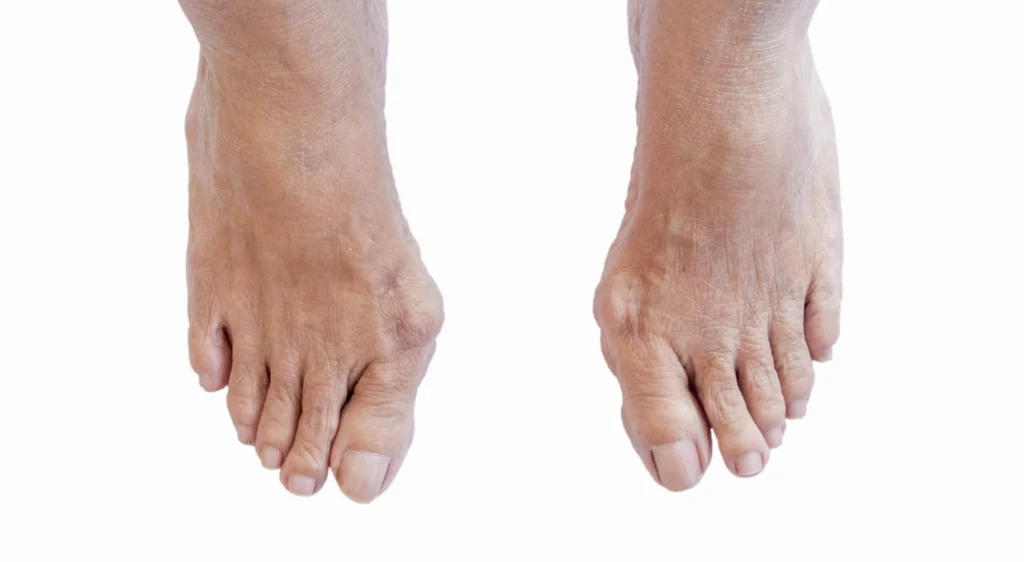
Hallux valgus is a progressive deformity: the big toe deviates outwards and the head of the first metatarsal becomes prominent on the inner side. That process advances at very different rates depending on the person. There are patients with a striking bunion at 50 that barely changes in two decades, and patients with a discreet deformity that within three years has pushed the second toe into a claw.
As long as the deformity is stable and causes neither pain nor compensation, conservative treatment makes sense: wide shoes with a respectful last, a gait study, custom insoles, night splints and periodic review.
What matters is understanding what that treatment does and does not do: it relieves symptoms and slows compensation, but it does not correct the bone angle. No insole returns a deviated metatarsal to its place. If anyone promises you otherwise, be wary.
The grades of hallux valgus, without the jargon
To decide, we need to measure. And measuring requires a weight-bearing X-ray, that is, standing up with your weight on the foot. A lying-down X-ray is misleading: the foot is not doing the work it does when walking.
On that image we measure two angles: the one formed by the big toe relative to its metatarsal, and the one between the first and second metatarsals. That gives us the classification:
| Grade | What the X-ray shows | What the patient notices | Usual approach |
|---|---|---|---|
| Mild | Early deviation of the big toe, slight separation between the first two metatarsals | Rubbing with certain shoes, occasional discomfort at the end of the day | Conservative and monitoring. Surgery only if pain conditions daily life |
| Moderate | Clear deviation, marked bony prominence, the big toe starts pushing the second | Recurrent pain, difficulty with footwear, calluses under the forefoot | This is the scenario where the percutaneous technique performs best |
| Severe | Very advanced deviation, the big toe overlaps or sits under the second, with associated claw toes | Constant pain, metatarsalgia, deformity of several toes | Surgery indicated. A combined approach and correction of the lesser toes are assessed |
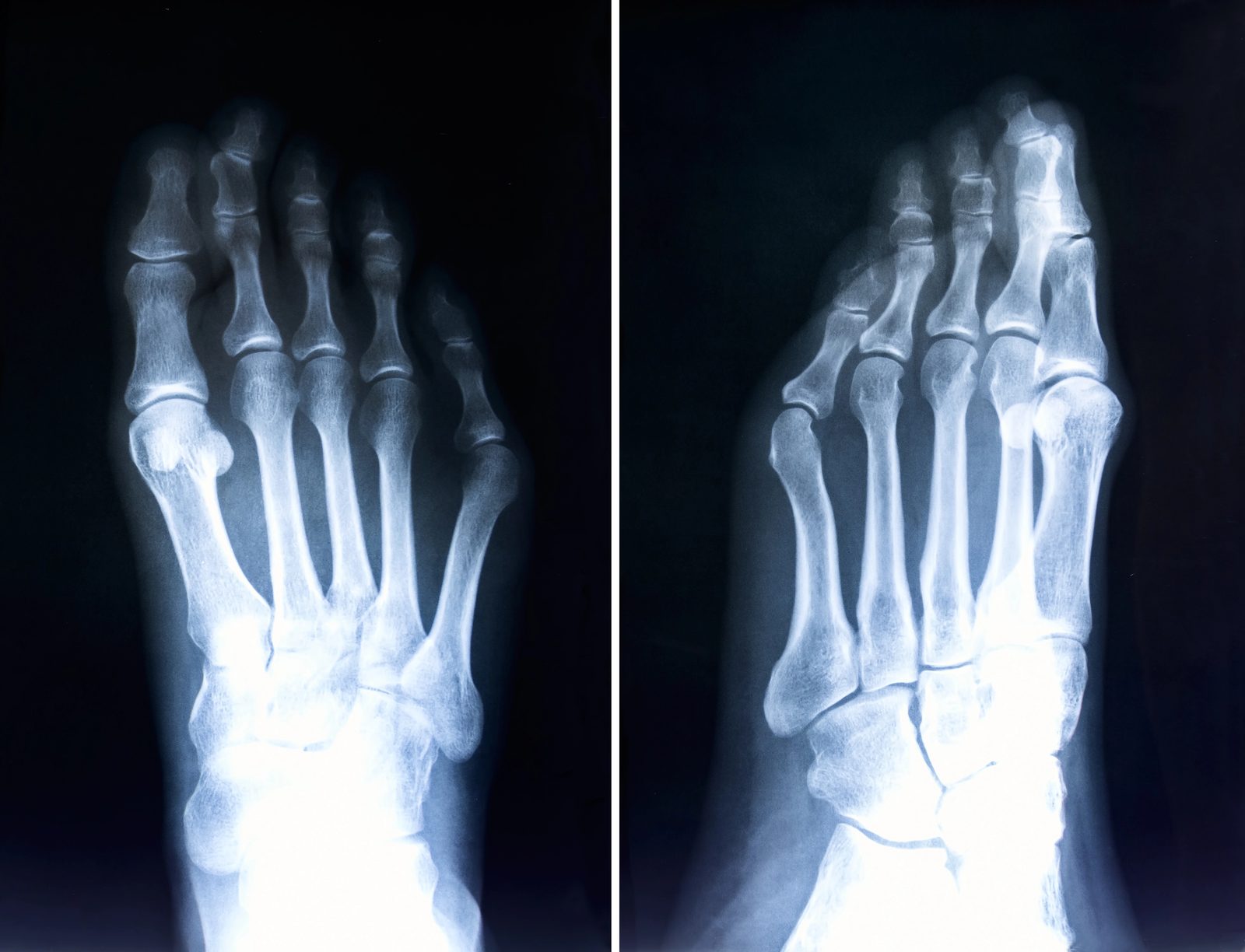
One important nuance: the radiological grade does not decide on its own. We see moderate bunions that hurt a great deal and severe ones that hurt little. The grade tells us which technique to apply; the symptom tells us when to apply it.
Am I a candidate for bunion surgery? The 6 signs
If you recognise yourself in three or more of these six situations, you are probably a candidate:
- The pain no longer depends on the shoe. At first it hurt with particular shoes. Now it bothers you barefoot as well, at home, or at night.
- You have started choosing your life around your feet. You turn down plans that involve walking, you have given up a sport, or you buy shoes for what fits rather than what you like.
- The second toe is beginning to deform. This is the most objective warning sign: when the big toe pushes, the second lifts, overlaps or claws. The problem is no longer confined to one toe.
- Calluses have appeared under the forefoot. They indicate that load distribution has changed and other metatarsals are taking on work that is not theirs. It is the step before metatarsalgia.
- Your insoles no longer relieve as they used to. If you need to change them often or they have stopped working, the deformity has gone beyond what conservative treatment can compensate. We develop this in the 5 warning signs that your insoles are no longer sufficient.
- Discomfort has appeared in your knee, hip or lower back. The body compensates an altered gait higher up the chain. We explain it in the domino effect.
What exactly we assess at the first consultation
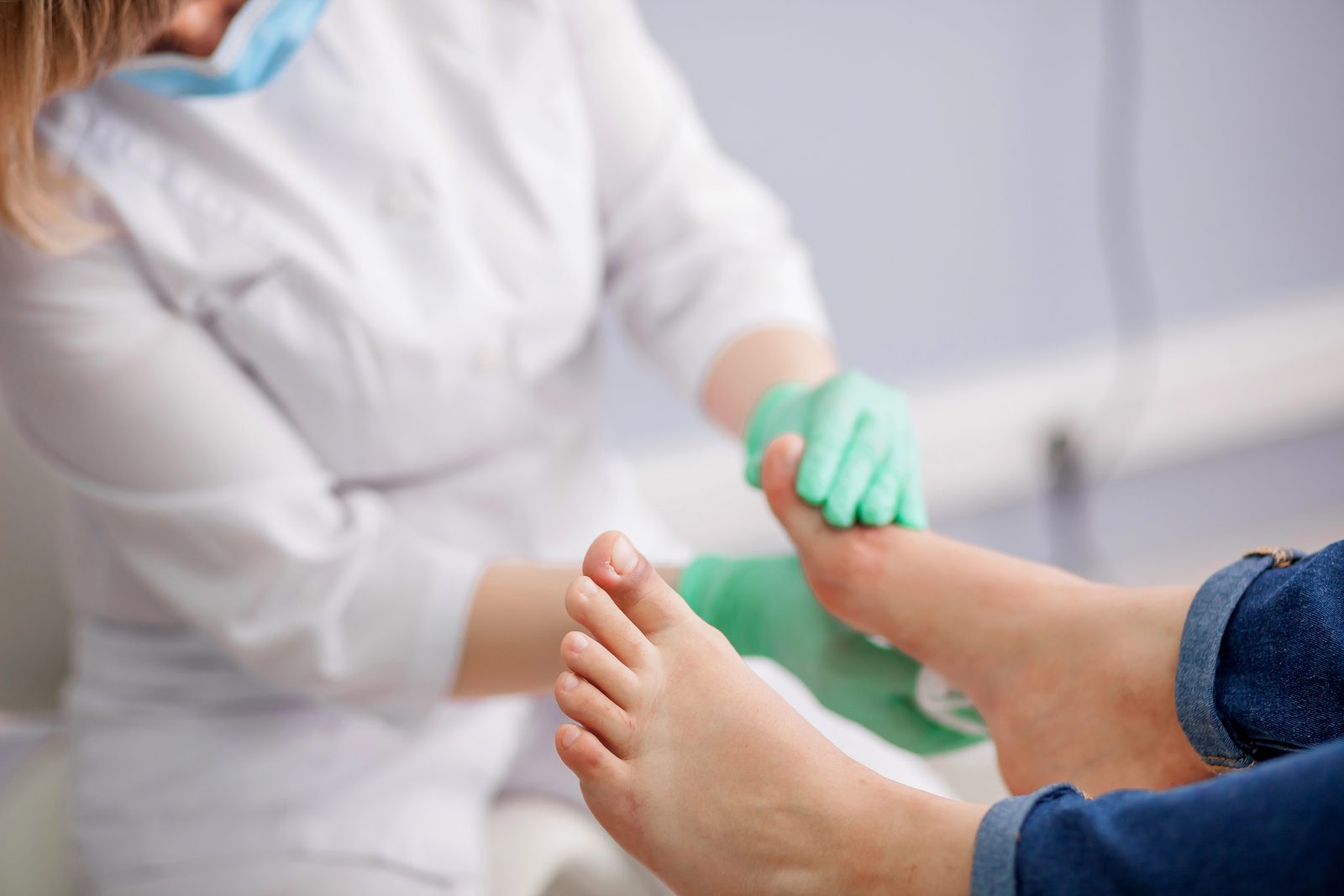
The in-person assessment is not a commercial formality: it is the diagnostic test. These are the five blocks we go through.
1. Your history, not just your foot
How long it has been there, how fast it has changed, what exactly hurts and when, what you have already tried, what you do for a living and how many hours you spend on your feet. An identical bunion is not approached the same way in someone with a desk job as in someone standing eight hours on a hard floor.
2. Examination with and without weight-bearing
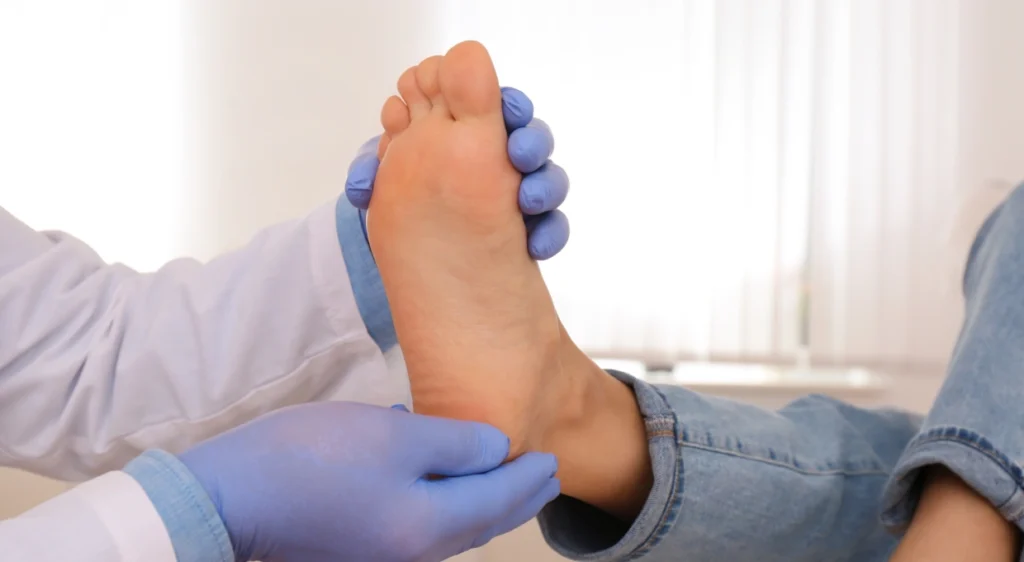
We check the mobility of the first metatarsophalangeal joint, whether the deformity is still reducible or already rigid, the state of the lesser toes, the presence of plantar calluses and how the foot behaves under load.
3. Weight-bearing X-ray
Here we measure the angles, assess the joint and rule out advanced arthritis, which would completely change the surgical plan.
4. Gait study
Because correcting the bone without correcting the biomechanical cause that deviated it is half a solution. The gait study tells us whether there is a pattern that should later be compensated with insoles.
5. Your life context
When it suits you, whether you can organise a quiet week, whether you travel, whether you have help at home, whether something is booked in your diary. Operating at the wrong time of year is an avoidable source of frustration: we develop it in summer or winter, what is the best time.
When we do NOT indicate percutaneous surgery
This part matters as much as the previous one. There are situations in which we say no, or not yet:
- Deformity without symptoms. If it does not hurt, does not limit you and is not progressing, there is no reason to operate. A bunion is not operated on for cosmetic reasons.
- Advanced arthritis of the first joint. If the joint is already degenerated, the deviation is not the only problem and the approach changes.
- Uncontrolled circulation or healing problems. All foot surgery requires adequate blood supply. If there is vascular compromise or a decompensated underlying condition, that is stabilised first.
- Active infection or skin lesion in the area. Treated first, operated afterwards.
- Expectations we cannot meet. If someone comes looking for “a perfect foot for stilettos”, that has to be discussed beforehand, not afterwards. Surgery corrects a deformity and removes pain; it does not redesign a foot.
- The wrong moment in life. If you cannot afford a quiet week, it is better to wait and plan it properly.
If you are a candidate, what does it actually involve?
Minimal incision surgery (MIS) is performed through millimetric incisions of approximately 1 to 3 mm, guided by fluoroscopy. It is done under local anaesthetic at the ankle, as a day case and, in most cases, without screws or plates: stabilisation is achieved with a specific functional dressing.
The most relevant practical consequence is that the patient walks out on their own two feet the same day, in a rigid-soled post-surgical shoe. No crutches and no admission.
For the full comparison with the traditional method, it is here: open surgery vs MIS technique. And if pain is what worries you — the most common case — we address it head-on in does bunion surgery really hurt?
If it involves both feet, operating on both feet at once explains when that can be considered. And if you are travelling from abroad, the full planning is set out in the guide to foot surgery in Spain.
And if today I am not a candidate?
An answer of “not yet” does not mean “come back when you cannot stand it any more”. It means leaving the consultation with a plan: which footwear, which insoles, which exercises, which signs to watch and when to be reviewed again. A monitored bunion reviewed every twelve to eighteen months is operated on at the optimal moment, not the desperate one.
And that is the real difference: it is not about operating sooner or later, but about deciding with information instead of deciding out of fear.
The assessment, explained by the doctor himself
If you would rather hear it than read it, Dr Israel San Román explains it here (in Spanish):
Frequently asked questions
Can I know whether I am a candidate without attending in person?
With a photograph of your feet we can give you an orientation as to whether the case fits the usual profile, but the surgical indication requires an in-person examination and a weight-bearing X-ray. Nobody can indicate foot surgery from a photograph alone.
Is there an age limit for bunion surgery?
There is no age limit as such. What we assess is general health, circulation in the limb and healing capacity. In fact, because the percutaneous technique is performed under local anaesthetic and without admission, it is particularly suitable for older patients.
I have a bunion and claw toes. Is everything corrected together?
In most cases yes, and it is advisable: the deformity of the lesser toes is usually a consequence of the hallux valgus, and correcting only one of the two leaves the problem half solved.
Will I be left with a scar?
The incisions are 1 to 3 mm, so the marks are very small and become barely noticeable over time. There is no longitudinal scar as in open surgery.
Can I have surgery if I work standing up?
Yes, but it needs planning. Returning to work depends on the type of job, the hours on your feet and individual progress. We make it concrete at the assessment, with real dates in your diary.
Who stands behind this content
Content produced by Clínica San Román, dedicated to percutaneous foot surgery in Alicante since 1979, three generations. Medical team of the clinic:
Dr. José Manuel San Román Pérez — Fundador y Director Médico. Podólogo. Especialista en Cirugía Percutánea del Pie. Nº Colegiado: 2077.
Dr. I. San Román Sirvent — Médico. Especialista en Medicina Familiar y Comunitaria. Board Certified in Minimally Invasive Foot Surgery (USA). Nº Colegiado: 03-0310448-2.
Clínica San Román (Elosnasi, S.L.) · Registered healthcare centre no. 5357, Registro Autonómico de Centros, Servicios y Establecimientos Sanitarios de la Comunitat Valenciana.
Last updated: 31 August 2026.
This article is for information purposes and does not replace an in-person medical assessment. Every case requires an individual diagnosis.
- 📞 Phone: (+34) 965 921 156
- 📧 Email: info@clinicasanroman.com
- 📍 Address: Av. del Doctor Ramón y Cajal 1, 03001 Alicante, Spain