Our feet support our entire body weight and carry us through thousands of steps every day, so it’s no wonder they’re a common source of discomfort. Knowing the most common foot problems helps you identify them early and know when to seek medical advice. These are the ones we see most often in our practice.
Bunion (hallux valgus)
It is a progressive deviation of the big toe toward the other toes, with a bump at the base that rubs against the shoe. It usually causes pain, difficulty putting on shoes, and, over time, deformity. You can read more in our guide on bunions (hallux valgus).
Claw toes and hammer toes
These are deformities in which one or more toes bend abnormally. They cause chafing, calluses on the top of the foot, and discomfort when walking. They are often associated with bunions and imbalances in the gait.
Plantar fasciitis
It is an inflammation of the plantar fascia, the tissue that runs along the sole of the foot. It manifests as heel pain, especially when taking the first steps of the day. It is very common among active people, runners, and those who spend many hours on their feet.
Metatarsalgia
It is pain in the forefoot area, right on the pad under the toes. It is caused by overuse of the metatarsals and is often related to gait, footwear, or deformities such as bunions.
Ingrown toenail
It occurs when the edge of the nail grows into the skin, causing pain, redness, and sometimes infection. Improper nail trimming or tight shoes are often the cause. It is best to treat it early to avoid complications.
Plantar warts (papillomas)
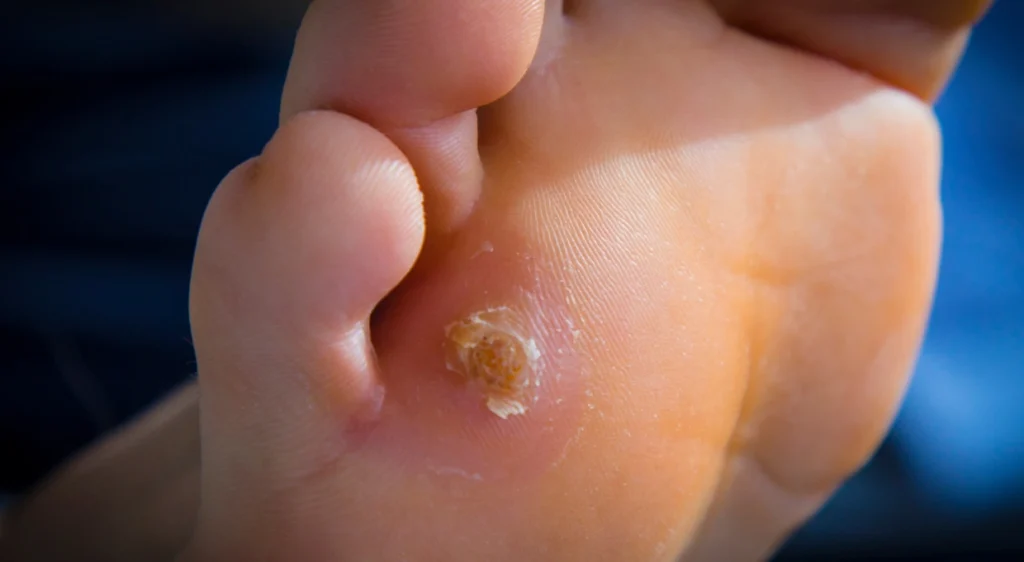
Caused by a virus, they appear on the sole of the foot as rough lesions that can be painful when walking. They spread easily in damp environments (swimming pools, locker rooms). There are effective treatments, such as Swift® microwave technology.
Calluses, corns, and heel spurs
Calluses and corns are thickened areas of skin caused by continuous friction or pressure; a heel spur is a calcification in the heel that may accompany plantar fasciitis. Both are often indicative of improper pressure distribution while walking.
When should you see a podiatrist?
If you experience frequent pain, if your activity is limited, if deformities develop, or if your symptoms do not improve, it is best to seek a professional evaluation. Detecting the problem early makes treatment easier and, in many cases, prevents it from getting worse. At Clínica San Román, we evaluate each case on an individual basis.
Other Common Disorders
In addition to the above, in our practice we often see flatfoots and cavus feet (abnormalities of the arch that alter pressure distribution), fungal infections of the skin and nails (onychomycosis), which cause the nail to thicken and discolor, and talalgia, or heel pain, resulting from various causes. Many of these conditions are interrelated: an abnormal gait can ultimately lead to calluses, overuse, and a chain reaction of pain.
Frequently Asked Questions
Is it normal for your feet to hurt as you get older? It becomes more common with age, but pain is not something you simply have to accept: it almost always has a cause that can be treated or alleviated. It’s important not to normalize it.
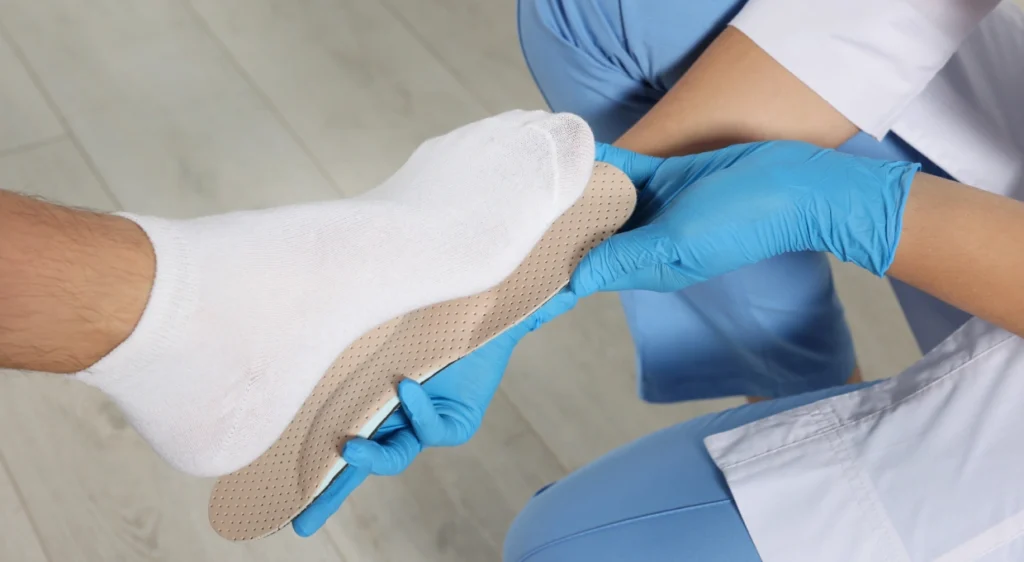
Do templates solve these problems? Custom insoles help correct pressure distribution and relieve many discomforts, but they are no substitute for a diagnosis: the first step is to identify the cause through an evaluation.