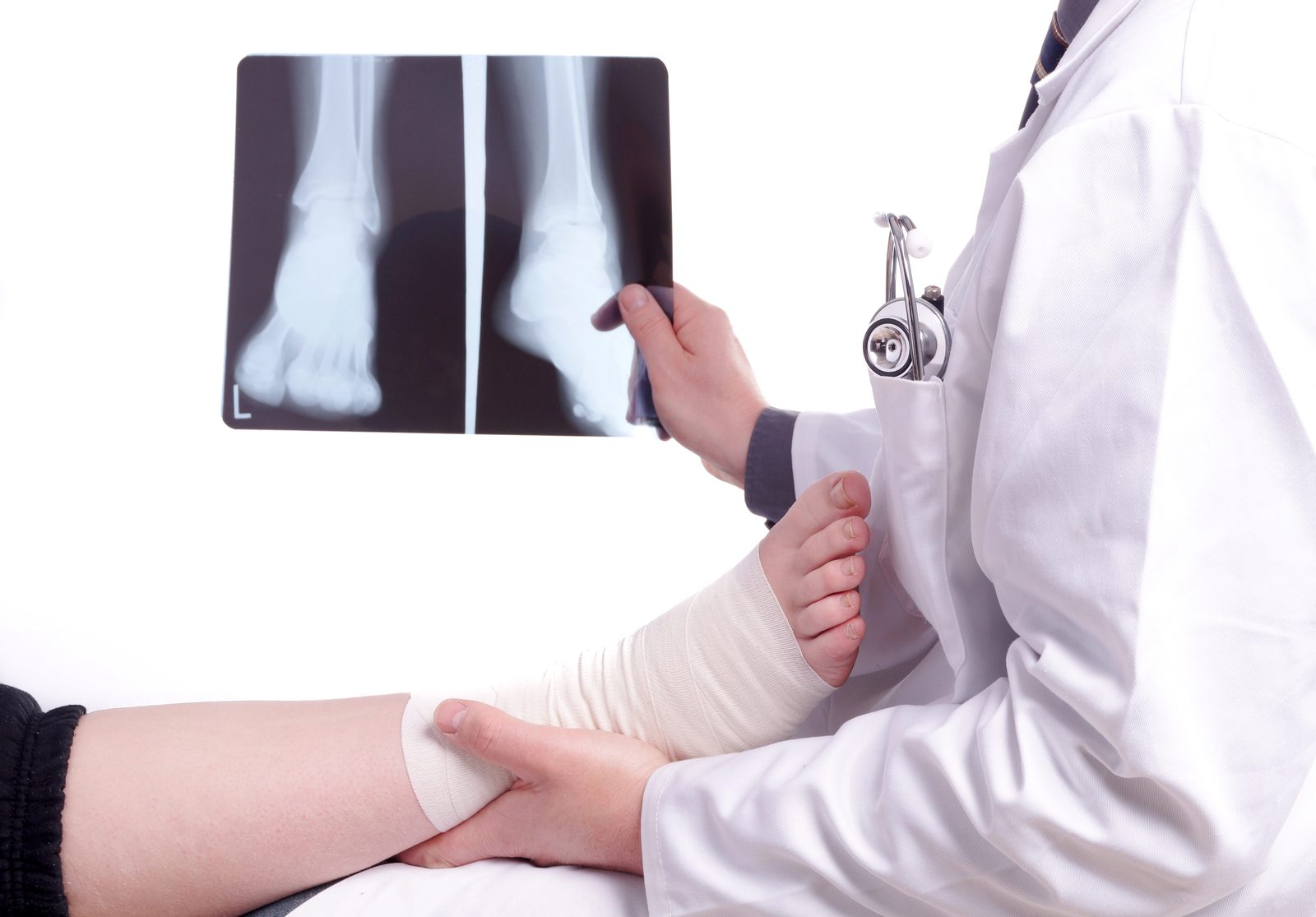
“A friend of mine had surgery and years later the bunion came back. Could that happen to me?”
Yes. It can happen: a bunion coming back after surgery is a known reality. And any clinic that tells you otherwise is selling you something.
Recurrence of hallux valgus — the deformity reappearing after surgery — is a known reality in foot surgery. It is neither frequent nor expected, but it exists. And since it is the second reason patients postpone surgery, after fear of pain, it deserves a serious explanation rather than a reassuring phrase.
In this article we explain why it really happens, what is done to reduce the risk, and what options you have if you have already been operated on elsewhere and the bunion has come back.
First: what a recurrence actually is
It is worth distinguishing two things patients often confuse:
- Insufficient correction: the deformity was never fully corrected. It is not that it “came back”, it is that it never went away. It is detected on the follow-up X-ray in the first months.
- True recurrence: the foot was corrected, stayed corrected for a time, and then the deviation gradually reappeared.
They are different problems, with different causes. And the distinction matters a great deal when deciding what to do.
The 4 real causes of a bunion coming back after surgery
1. The bump was corrected, but not the angle
This is by far the most frequent cause, and the most avoidable.
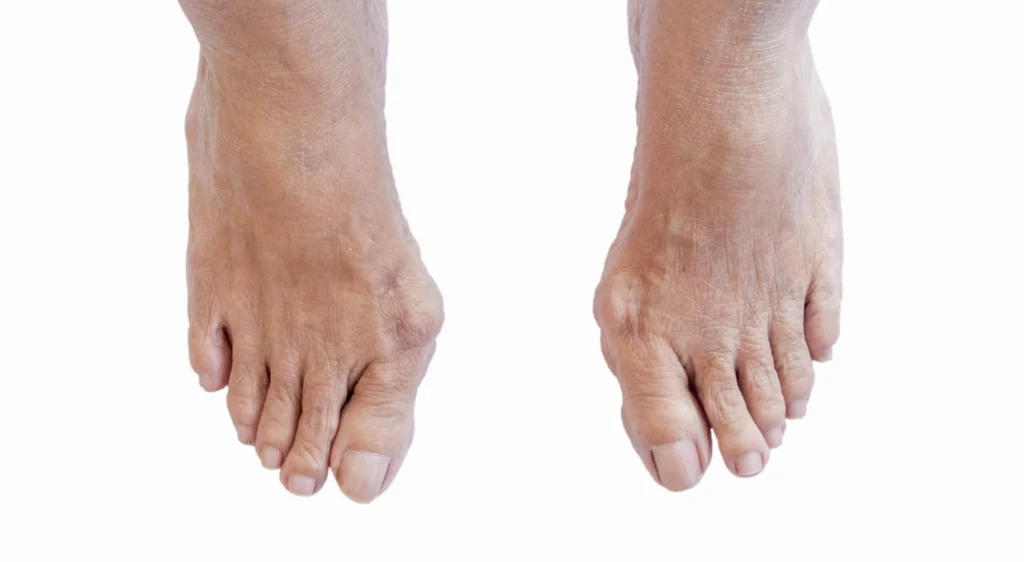
A bunion is not a bump: it is a structural deviation. The first metatarsal has moved away from the second and the big toe has deviated outwards. That visible “bump” rubbing against the shoe is simply the head of the metatarsal protruding.
If a procedure is limited to filing down that bony prominence — technically an exostectomy — the foot looks better and stops rubbing for a while. But the bone remains exactly as deviated as before. And since the forces that deviated it keep acting, the deformity reappears.
Hallux valgus surgery that does not realign the bone is not a correction: it is a postponement.
2. The biomechanical cause was not corrected
Hallux valgus almost never appears out of nowhere. Behind it there is usually a gait pattern that repeatedly overloads the first ray: excessive pronation, a hypermobile first metatarsal, shortening of the posterior chain.
If the bone is corrected but the patient is returned to the same mechanics that deviated it, the effect has been corrected and the cause left intact. That is why the gait study and, where appropriate, custom insoles after surgery are not an extra: they are part of the treatment.
3. Footwear and habits afterwards
A newly corrected foot is in a consolidation phase. Going back too early to narrow, pointed shoes or to high heels for long hours subjects the correction to exactly the same forces that caused the problem.
This is not about giving up elegant shoes forever. It is about respecting the timescales and making everyday footwear a respectful shape. We set it out in what shoes to wear after bunion surgery.
4. Individual factors that cannot be changed
There is a real hereditary and structural component: ligamentous laxity, foot shape, joint type. Some feet have a greater tendency to deformity, just as some people have a greater tendency to other structural conditions.
This factor cannot be eliminated. What can be done is to take it into account in the surgical planning and in the follow-up.
Does not having screws make a difference?
It is a very reasonable question and we are asked it constantly: “if nothing is put inside, what holds the bone?”
The answer is that in the percutaneous technique the bone is stabilised by a specific functional dressing that holds the correction during the consolidation period. That dressing is not a plaster: it is an element of the treatment, applied technically and reviewed at follow-up.
Internal fixation material solves a problem inherent to open surgery: when the foot is widely opened and the soft tissues destabilised, something is needed to hold it. Since that destabilisation does not occur in the percutaneous approach, the requirement is different.
Furthermore, not having screws avoids a far from rare scenario: material that irritates, migrates or has to be removed in a second procedure. The full comparison between both methods is in open surgery vs MIS technique.
How the risk is reduced: the 5 points that make the difference
| What | Why it reduces the risk of recurrence |
|---|---|
| Prior weight-bearing X-ray | Allows the real deviation to be measured with the foot working, not the apparent one |
| Correcting the angle, not the prominence | Acting on the structure and not only on the visible relief |
| Correcting the lesser toes too | An uncorrected clawed second toe keeps pushing the first |
| Gait study and insoles where indicated | Neutralises the mechanical pattern that caused the deviation |
| Complete post-operative follow-up | Detects any loss of correction in time, while it is still manageable |
None of these five points guarantees a result — nobody can guarantee that — but together they are the difference between planned surgery and improvised surgery.
I have already had surgery and it has come back. What can I do?
First of all: it is not a lost cause, and it is not your fault.
What we need is to understand what happened. At a second-opinion assessment we review:
- The previous surgical report, if you have it, to know which technique was used.
- A current weight-bearing X-ray, to measure the real deviation and compare.
- The state of the fixation material, if you have any.
- Joint mobility and the presence of arthritis.
- Your gait pattern, to identify the cause that was left untreated.
From there, options are put forward, and they do not always involve operating again. In some cases, correcting the mechanics and the footwear stabilises the situation. In others, revision surgery is indeed indicated.
What makes no sense is repeating exactly the same approach that already failed once.
The same question, answered on video
It is one of the questions that reaches us most often through our YouTube channel, and we answer it there just as we do here: without embellishment (in Spanish).
Frequently asked questions
How long afterwards can a recurrence appear?
There is no single timescale. Insufficient correction usually becomes evident in the first months, on the follow-up X-ray. A progressive recurrence may show years later. That is why long-term follow-up has value.
Can the same foot be operated on twice?
Yes, revision surgery is possible. It is technically more demanding than a first procedure because it means working on an already operated foot, and it requires particularly careful planning.
If it runs in my family, will it definitely come back?
No. The hereditary component influences the tendency to develop the deformity, but it does not determine the outcome of a well-planned correction accompanied by biomechanical control.
Are insoles compulsory after surgery?
Not in every case. They are indicated when the gait study shows a pattern worth compensating. When they are indicated, they are among the factors that help most to maintain the correction over time.
Can I ask for a second opinion if I was operated on at another clinic?
Of course. It is a common consultation. We recommend bringing the surgical report and previous X-rays if you have kept them; they help a great deal in understanding the starting point.
Who stands behind this content
Content produced by Clínica San Román, dedicated to percutaneous foot surgery in Alicante since 1979, three generations. Medical team of the clinic:
Dr. José Manuel San Román Pérez — Fundador y Director Médico. Podólogo. Especialista en Cirugía Percutánea del Pie. Nº Colegiado: 2077.
Dr. I. San Román Sirvent — Médico. Especialista en Medicina Familiar y Comunitaria. Board Certified in Minimally Invasive Foot Surgery (USA). Nº Colegiado: 03-0310448-2.
Clínica San Román (Elosnasi, S.L.) · Registered healthcare centre no. 5357, Registro Autonómico de Centros, Servicios y Establecimientos Sanitarios de la Comunitat Valenciana.
Last updated: 31 August 2026.
This article is for information purposes and does not replace an in-person medical assessment.
- 📞 Phone: (+34) 965 921 156
- 📧 Email: info@clinicasanroman.com
- 📍 Address: Av. del Doctor Ramón y Cajal 1, 03001 Alicante, Spain