PLANTAR WART (VERRUCA) · HPV · ALICANTE
Plantar wart (verruca): causes, symptoms and treatment
What a plantar wart is, why it appears, how to recognise it and the options for treating it.
This page answers the most common questions about plantar warts (also called verrucas or plantar papillomas): what they are, what causes them, the symptoms to watch for and the treatment options available. A plantar wart is a benign skin lesion caused by the human papillomavirus (HPV). At Clínica San Román in Alicante, our reference treatment for stubborn plantar warts is Swift® microwave technology, which activates the body’s own immune response against HPV and is backed by a randomized clinical trial (2025).
⭐ 4.8/5 (200+ reviews) · 🏅 Cert. MIS23BE03 · 🇪🇺 5 languages
Specialists since 1979
Since 1979
Family clinic founded in 1979
🏅 MIS23BE03
First in Europe to receive American Board certification
⭐ 4.8
200+ verified reviews on Google
🇪🇺 5
Languages: ES · EN · NL · FR · DE
Led by Dr. José Manuel San Román Pérez (founder) and Dr. Israel San Román Sirvent, a Fellow of the American Academy of Ambulatory Foot & Ankle Surgery since 1986.
What is a plantar wart?
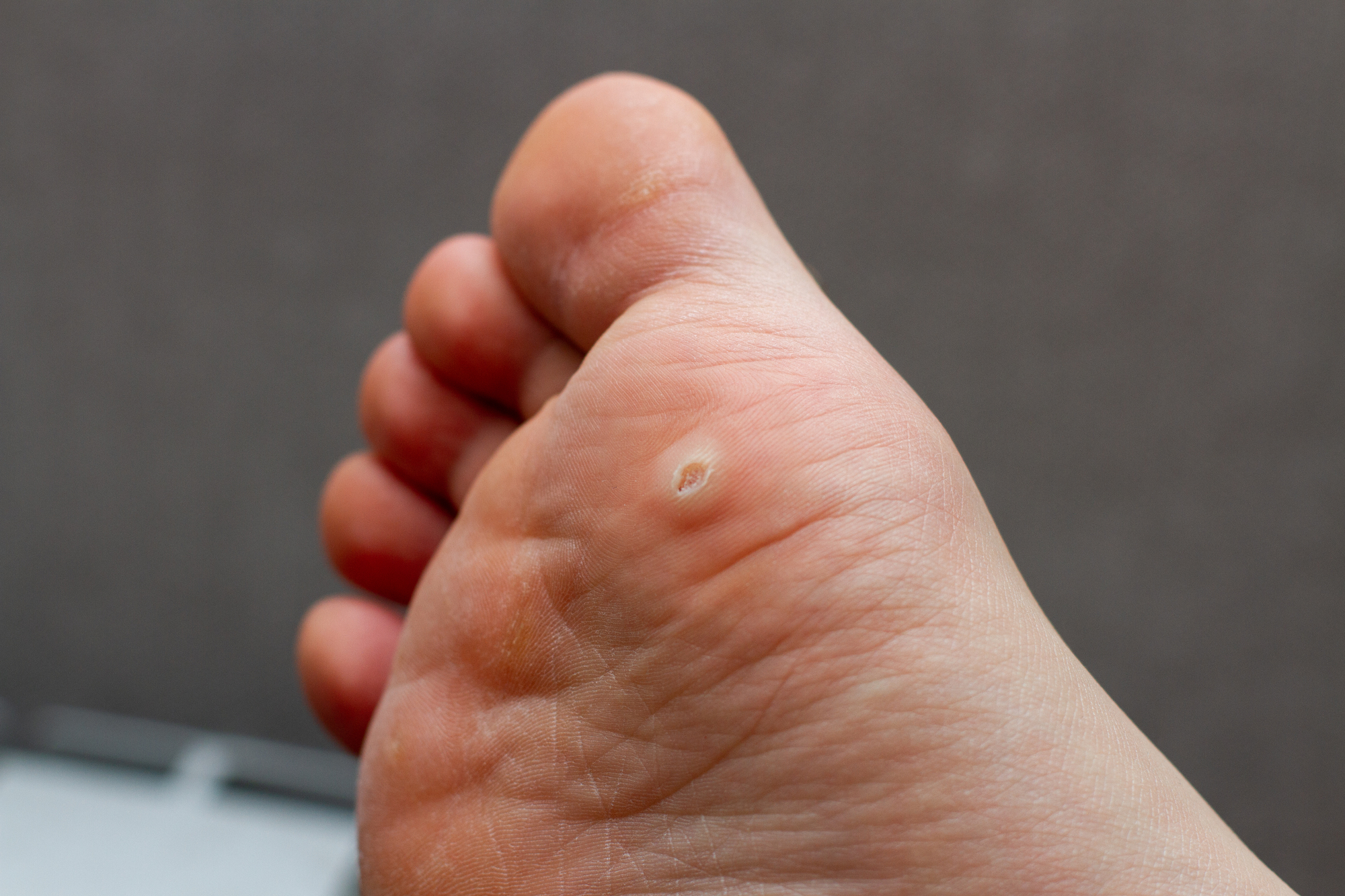
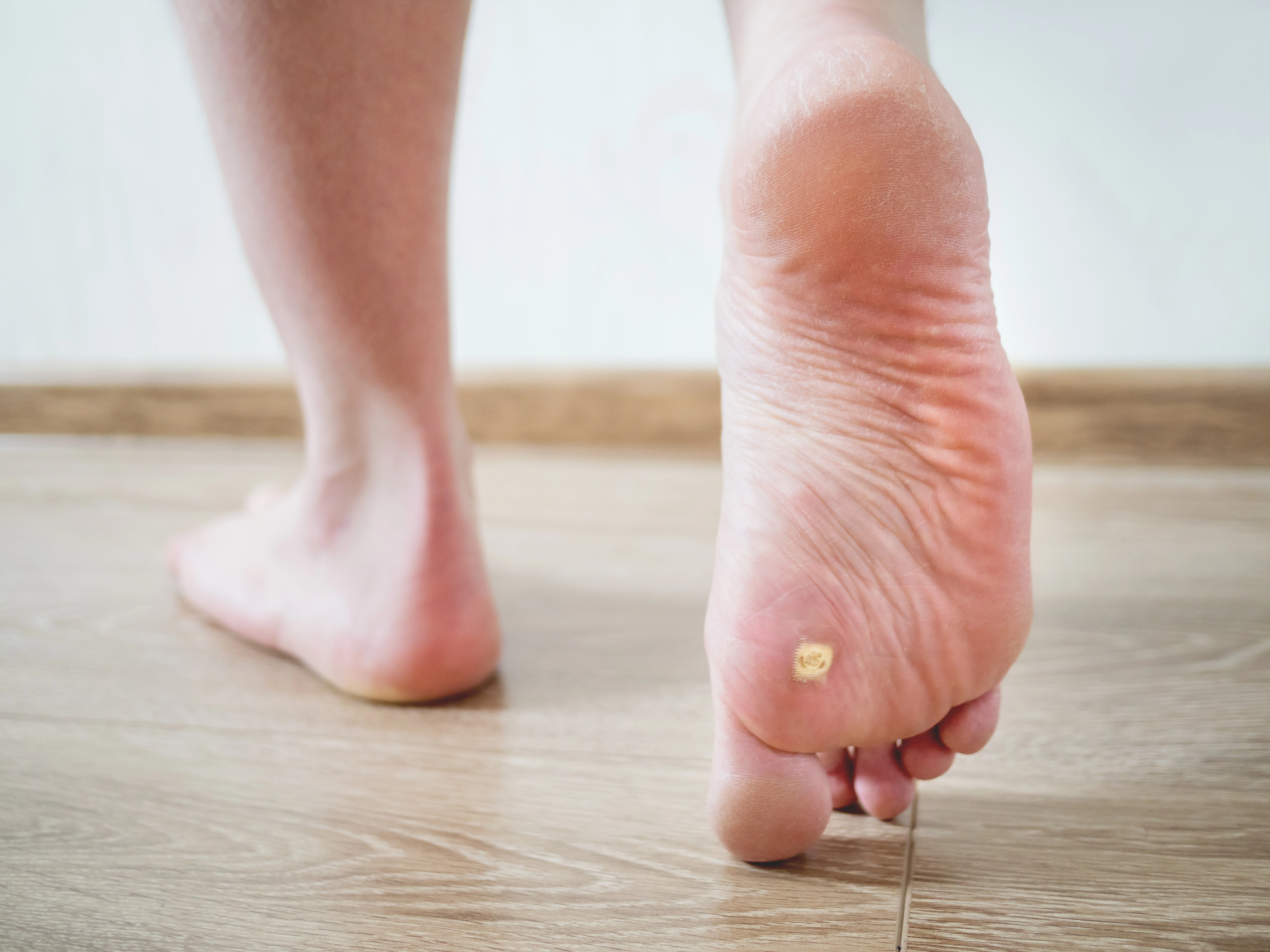
A plantar wart —also known as a plantar papilloma or verruca plantaris—is a benign skin lesion caused by the human papillomavirus (HPV). It appears on the sole of the foot, where body weight pushes it inward, giving it its characteristic inverted and painful shape.
HPV enters the skin through micro-tears or cuts in warm, humid environments (swimming pools, locker rooms, gyms, communal showers). This is why plantar warts are particularly common in children, teenagers, and athletes, although they can appear at any age.
How to Identify a Plantar Wart
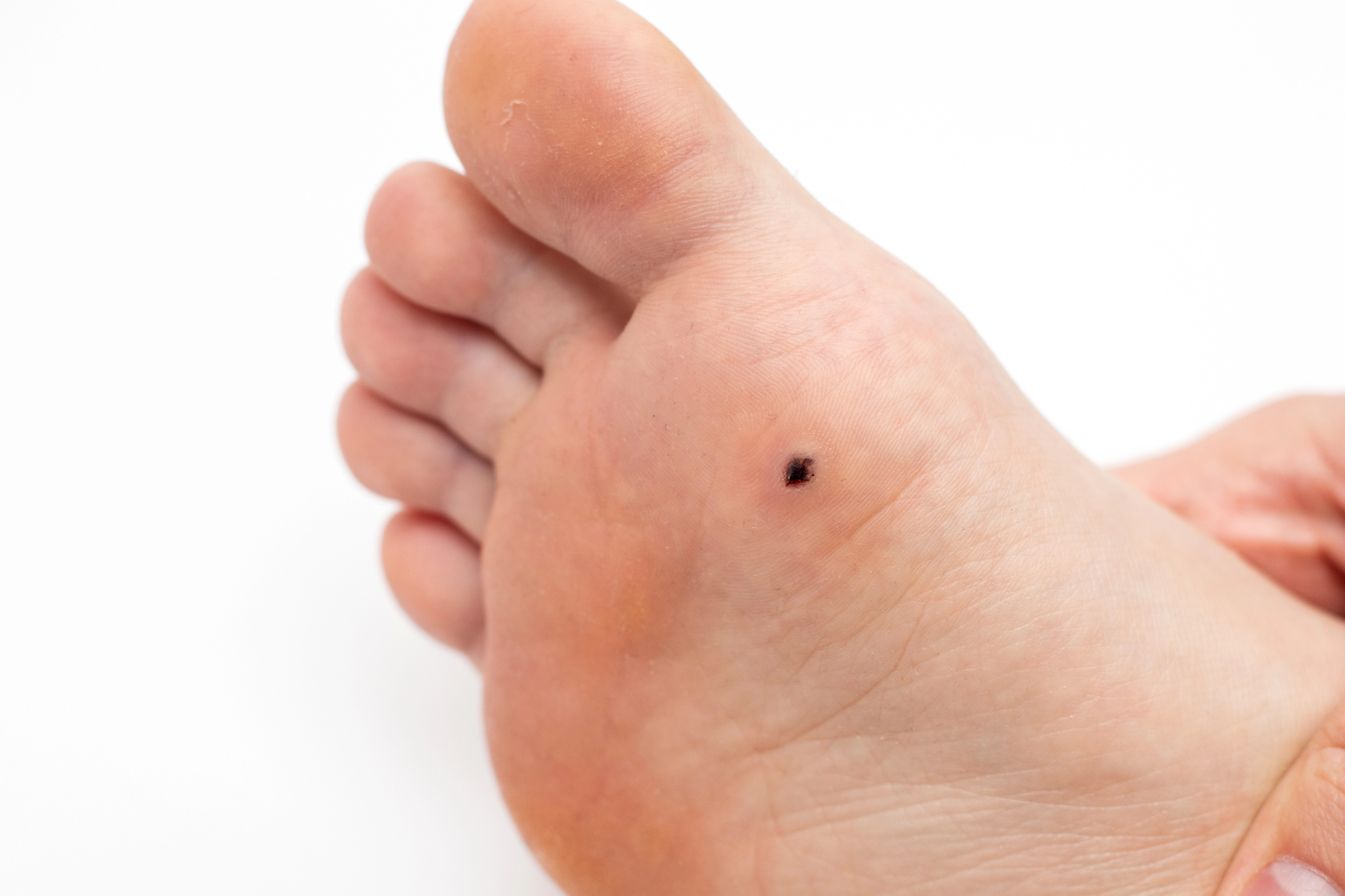
- A round or oval lesion on the sole of the foot, often under the metatarsal heads, the heel, or the toes.
- Black dots in the center (clotted capillaries) — a characteristic sign.
- Well-defined edges with thickened skin around them.
- It disrupts the skin’s normal lines (fingerprints): this is what distinguishes it from a callus.
- Pain when pinching from the side (Dellaporta’s sign), rather than when pressing on top.
Wart or callus?
They are sometimes confused. A callus (heloma) is a reactive thickening of the skin caused by pressure or friction, with no viral involvement; the skin’s texture remains intact, and it hurts when pressed vertically. A wart is an HPV infection; it disrupts the skin’s surface, has black dots, and is painful when pinched from the side. When in doubt, the diagnosis is confirmed with a dermatoscope during the office visit.
Symptoms: When Should You Be Concerned?
- Pain when walking, as if stepping on a sharp pebble.
- Pain when pressing on the side of the area.
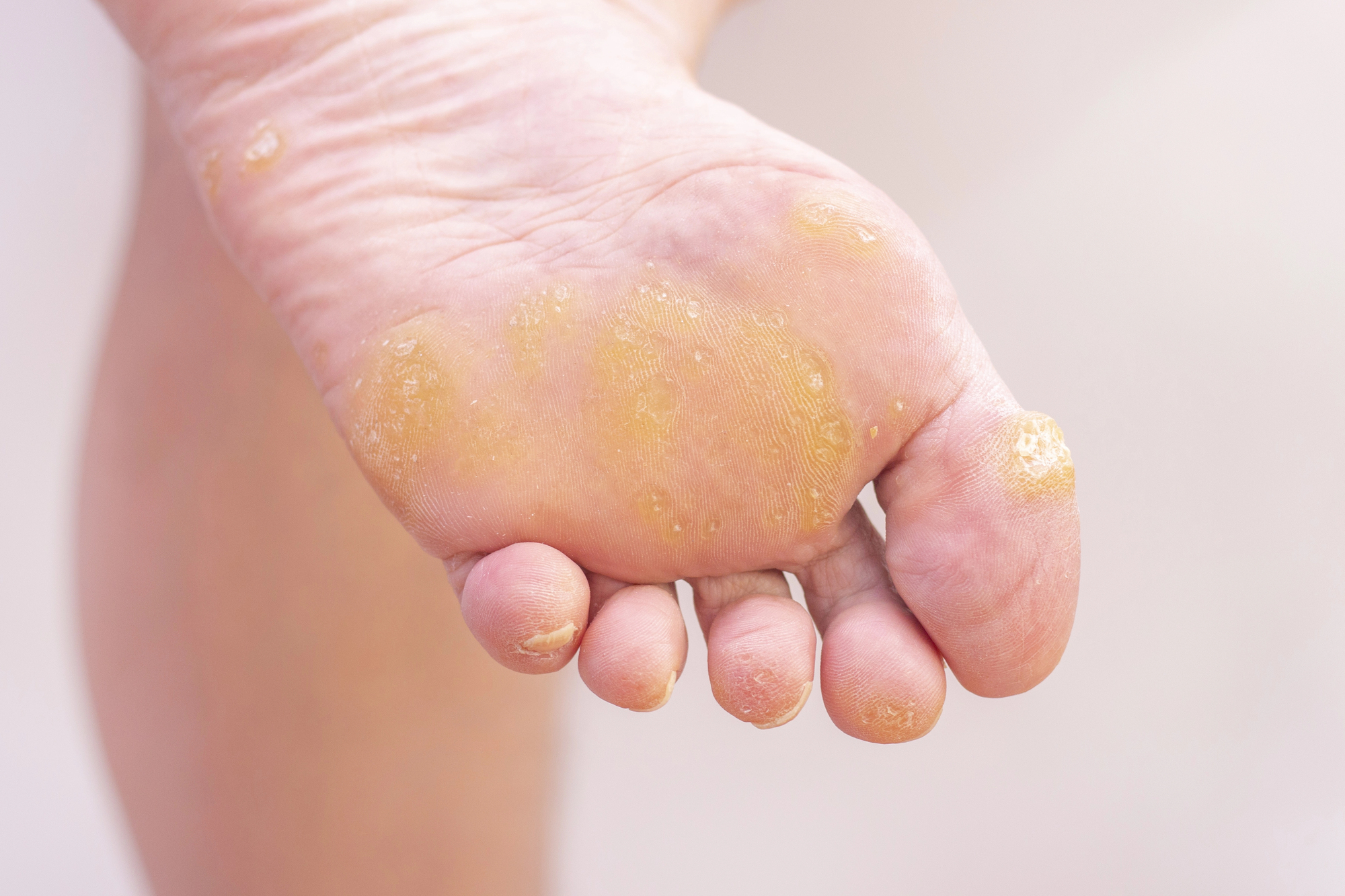
- Warts that grow larger or new ones that appear around them (mosaic warts).
- Bleeding when filing or applying pressure.
- Change in color or appearance: darkening, ulceration, rapid growth.
🔴 When to seek medical attention
- The wart has been there for more than 2–3 months and hasn’t gone away with over-the-counter treatments.
- It hurts when you walk or limits your daily activities.
- New warts appear around the original one.
- If you have diabetes or are immunosuppressed, your treatment requires special care.
- The lesion has an unusual appearance: differential diagnosis with other skin conditions.
Early diagnosis makes treatment much easier. Old and widespread warts are harder to remove.
Swift®: our reference treatment for plantar warts
The most advanced option for stubborn warts. Backed by a randomized clinical trial (2025).
Swift® is a medical device that applies microwave energy to the wart for about 5 seconds per spot, activating the body’s immune response to recognise and clear the human papillomavirus (HPV). Because it leaves the skin intact, it needs no anaesthesia, no cuts and no bandages, and it is suitable for people with diabetes. It is our treatment of choice for deep and stubborn plantar warts, where cryotherapy or salicylic acid often fall short.
Want the full detail —how it works, the session-by-session protocol and a treatment comparison? See our dedicated Swift® page.
Other treatment options (when Swift isn’t the best choice)
Although Swift is our treatment of choice for stubborn plantar warts, not all cases are the same. Depending on the size, number, location, and patient profile, we may recommend:
- Cryotherapy with liquid nitrogen for small, superficial, and recent warts.
- Bleomycin injection in selected cases of multiple or recalcitrant warts.
- High-concentration salicylic acid under the supervision of a podiatrist.
- Curettage with electrocoagulation under local anesthesia in cases involving a large volume of tissue.
- Monitoring of young children with recent warts (up to 65% heal spontaneously within 2 years if they are caused by HPV type 1).
⚠️ Personalized treatment. There is no one-size-fits-all solution. The podiatrist assesses the type of wart, how long it has been present, previous treatments, and the patient’s profile to recommend the treatment with the best balance of effectiveness and comfort.
Your first appointment with us
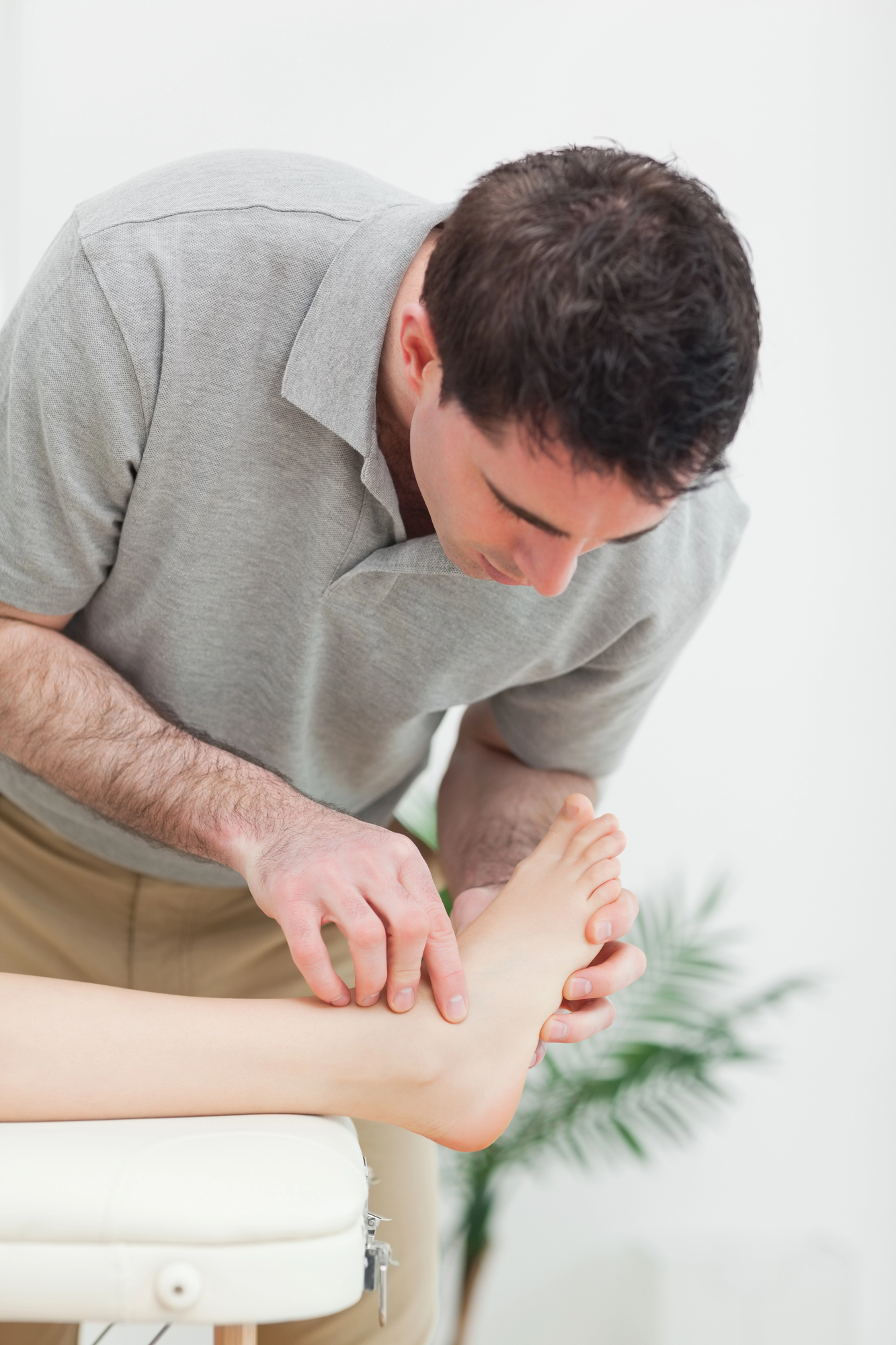
Free initial consultation with no obligation. During a visit, we do the following:
- Differential diagnosis using a dermatoscope to confirm that it is a wart and not a callus, a foreign object, or another condition.
- Assessment of the size, depth, and number of lesions.
- Review of medical history: duration of illness, previous treatments, comorbidities.
- Personalized treatment plan and fixed-price quote.
- Preventive measures to avoid reinfection and transmission to family members.
We provide service in Spanish, English, German, French, and Dutch.
Frequently Asked Questions About Plantar Warts
📋 About warts
🌊 About the Swift® treatment
❌ Myths
Say goodbye to plantar warts. Say goodbye to pain.
We have the technology, the experience, and the procedures. The initial consultation is free and requires no obligation. In just one visit, we’ll let you know which treatment is best for you and how long it will take.
📞 +34 965 921 156
✉️ info@clinicasanroman.com
📍 Av. del Dr. Ramón y Cajal 1, 03001 Alicante


