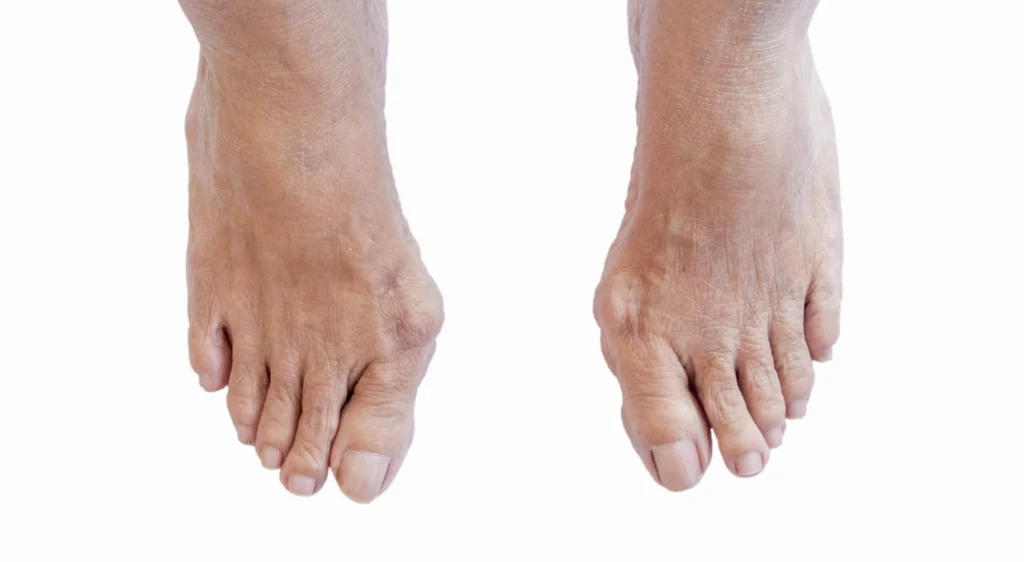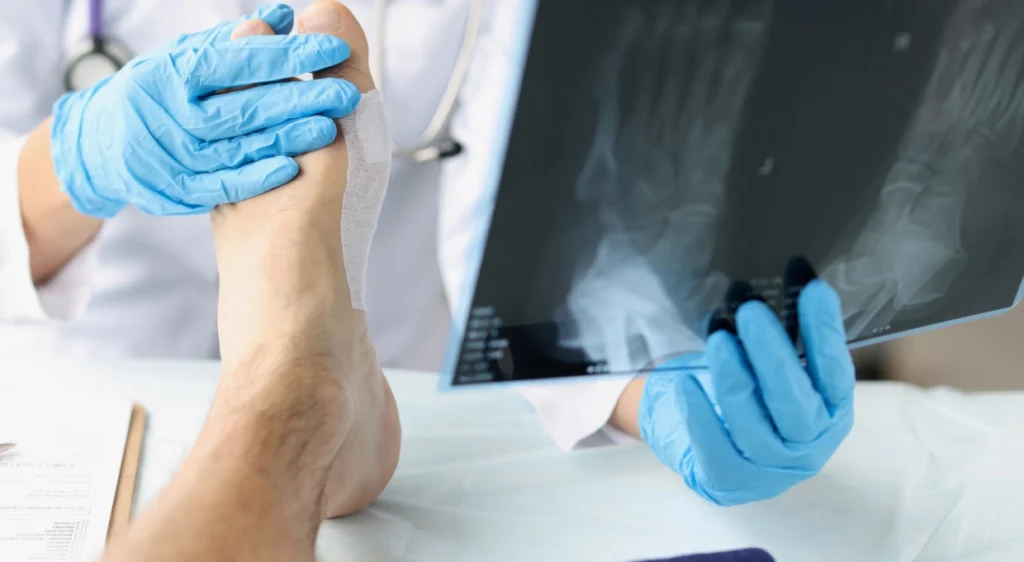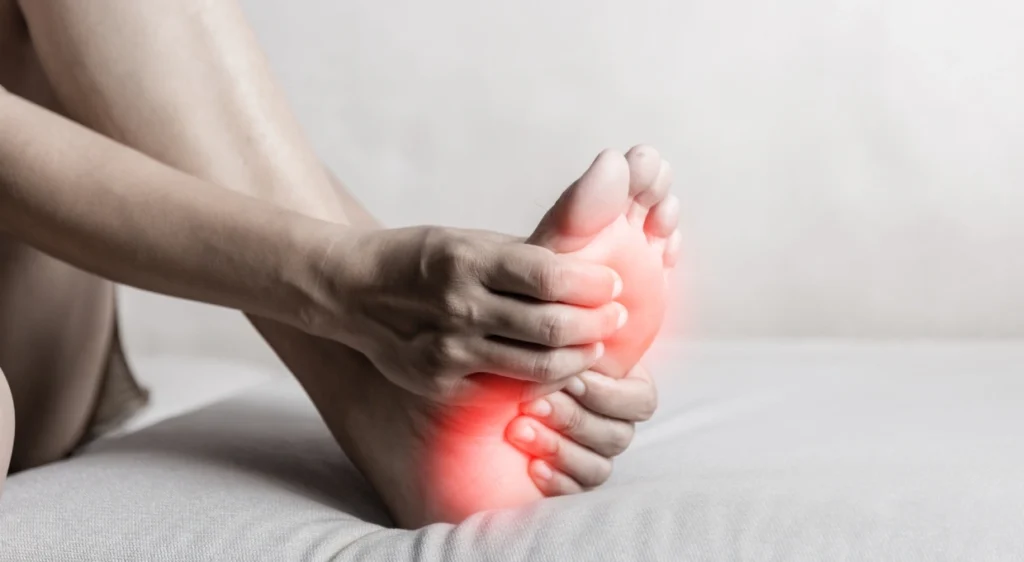
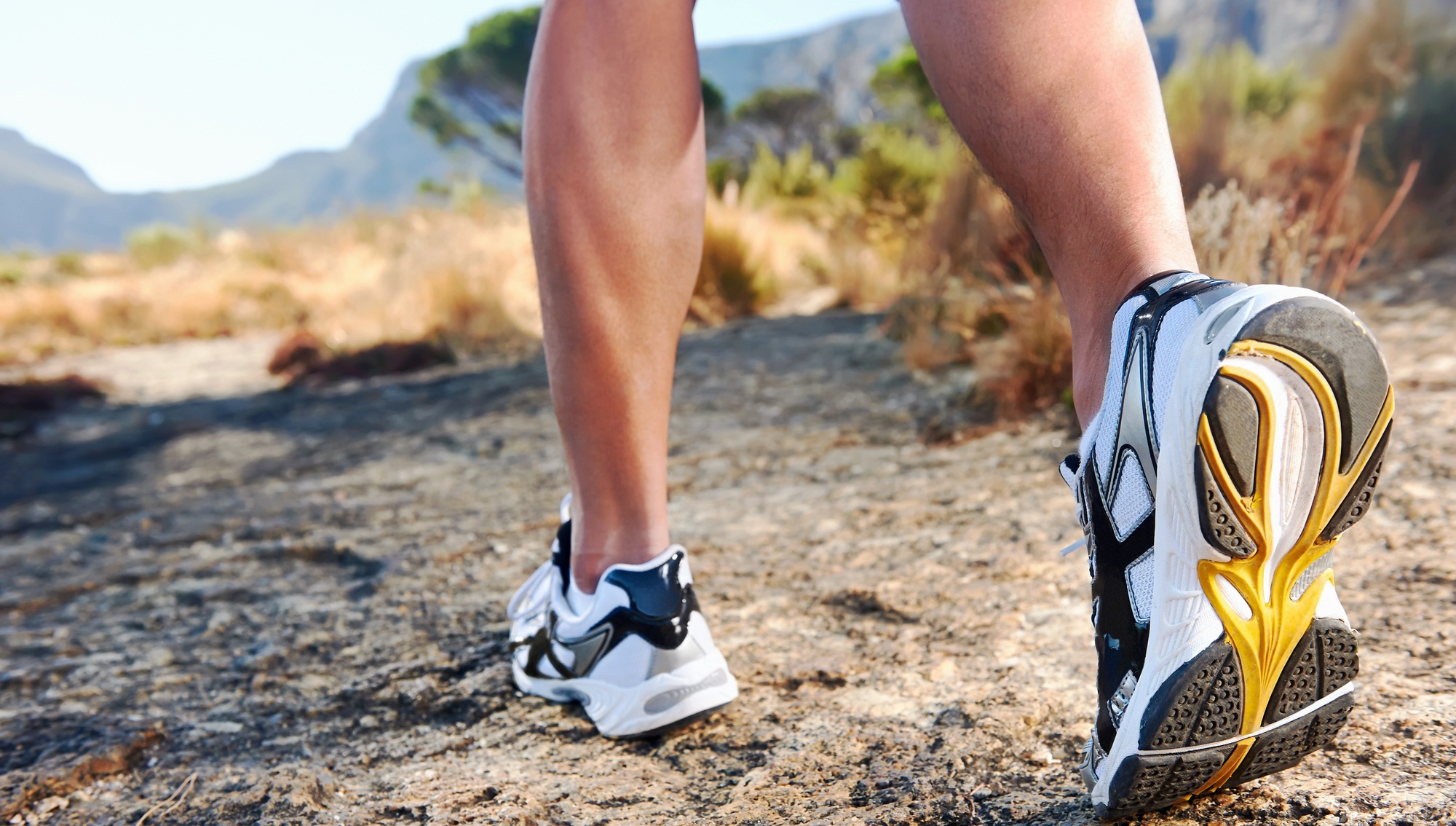
For an active person, a runner, a hiking enthusiast or someone who simply needs their daily walk to unwind, the feet are the main driving force. So when a deformity such as a bunion (hallux valgus) or claw toe appears, the physical pain is often accompanied by a much greater frustration: the fear of having to stop.
In the consultations at Clínica San Román, we hear the same concern on a daily basis: “Doctor, if I have surgery, how long will I be unable to train?
Many athletes postpone surgery, terrified by the spectre of the traditional post-operative period: months of immobility, muscle atrophy and a total loss of physical fitness. However, continuing to train with a deviated bone structure only aggravates the problem, altering the stride and transferring the impact to the knees and lower back.
Fortunately, Minimal Incision Surgery (MIS) has completely changed recovery times. By not using screws or requiring large incisions, the healing process is radically faster. If you’re an active person and want to know exactly what you’re up against, here’s the actual recovery timeline to get you back to sports without pain.
The key factor: immediate loading avoids atrophy
Before breaking down the timeline, it is vital to understand why the percutaneous technique is the athlete’s perfect ally. In traditional surgery, the foot is completely immobilized. This causes the calf muscles (calf and soleus) to atrophy in a matter of days and the tendons to lose elasticity.
With the MIS technique that we apply in Clínica San Román, you walk on your own foot the same day of the intervention. This simple biomechanical fact (supporting the foot with a post-surgical shoe) stimulates blood flow, accelerates bone consolidation and keeps your muscles awake. You are not starting from scratch when you decide to return to training.
Recovery Calendar: Phases to get back to your routine
Each patient heals at a different rate, but this is the standard schedule experienced by our most active patients:
Week 1: Immediate mobility and active rest
- What’s happening in your foot: This is the acute phase. The bone has been realigned and the millimetric tissues are beginning to close. You are wearing a functional bandage and a stiff-soled orthopedic shoe.
- What you can do: You walk around your home or on the street for short, essential trips from day one. You do not need crutches. However, the sport is paused. When you are not walking, the foot should be elevated to control the natural inflammation.
- The approach: Patience. You’re investing a week of peace of mind to gain years of pain-free sport.
Weeks 2 to 4: Transition to athletic shoes and back to the gym
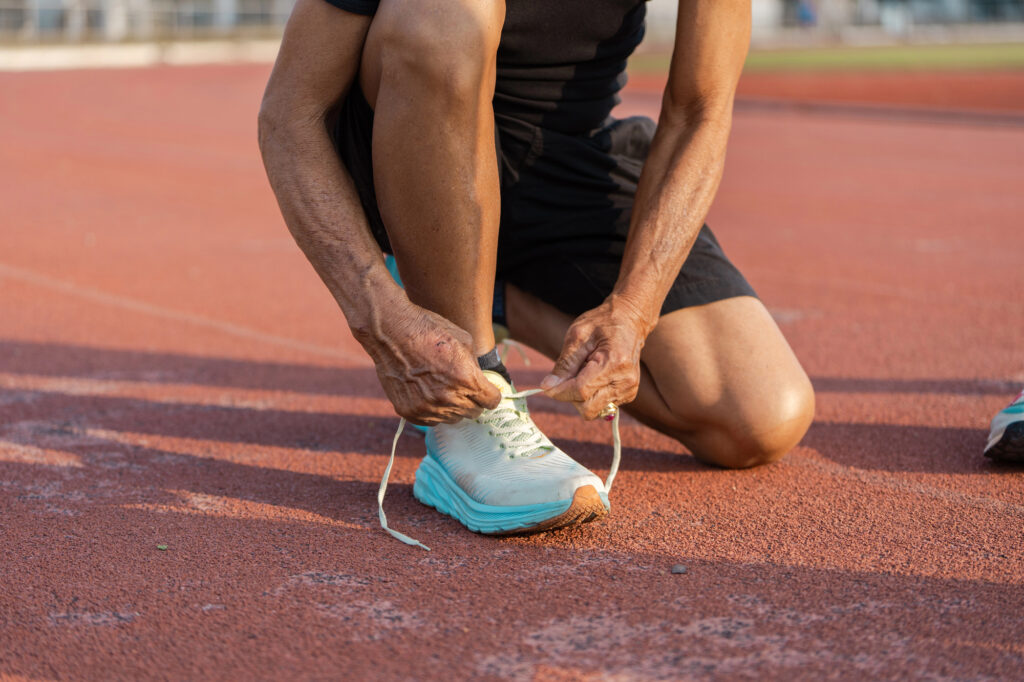
- What happens to your foot: In most cases, we remove the functional bandage. The micro-incisions are practically closed and the bone is creating the “soft callus” that stabilizes it.
- What you can do: Here you make a big milestone: you put on your own sneakers again (they should be wide and comfortable). On a sporting level, you can resume your upper body strength work at the gym, do core exercises and mobility routines that do not involve direct load on the forefoot.
- Cardio allowed: You can start swimming (once the skin is completely sealed) or use the exercise bike at a gentle pace, always supporting the weight on the heel or midfoot, without forcing the flexion of the toes.
Months 2 to 3: The return to moderate impact
- What happens in your foot: Bone healing is well advanced. There is no residual pain, just maybe a slight swelling at the end of the day if you spend many hours on your feet, which is completely normal.
- What you can do: It is time to awaken the proprioception of your foot. You can start by walking at a good pace (brisk walking) for long periods of time.
- Cardio allowed: The elliptical trainer becomes your best ally, as it allows you to raise your heart rate to the maximum and perform intense cardiovascular work without generating direct impact against the ground. Many patients also resume road cycling or light mountain biking at this stage.
From the 3rd and 4th month: Return to running and high impact.
- What happens in your foot: The bone is completely consolidated and firm. The biomechanics of your footprint are now natural, balanced and, most importantly, painless.
- What you can do: This is the answer to the big question of when can I run after bunion surgery. From week 12, with the approval of our medical team, you can progressively reintroduce continuous running.
- Cardio allowed: You can return to paddle tennis, tennis, crossfit or your high mountain hiking trails. You will notice an abysmal difference: having corrected the deformity, your foot impulsion and toe-off will be much more efficient, improving your overall performance.
Breaks the vicious circle of pain
Ignoring a structural problem in the foot for fear of stopping your sports routine is a strategy with an expiration date. The compensations your body makes to avoid bunion rubbing will end up causing plantar fasciitis, Achilles tendonitis or knee wear and tear that will force you to stop for much longer.
Percutaneous foot surgery is designed to interfere as little as possible with your life. It is a brief, controlled and strategic stop along the way to repair the foundation of your body.
Ready to take the plunge and get back to your best? If pain is already affecting your workouts, it’s time to find a solution. Our medical team will evaluate your case in detail. For a faster diagnosis, we invite you to send us a picture of the current state of your feet.
- 📞 Phone: (+34) 965 921 156
- 📧 Email: info@clinicasanroman.com
- Address: Av. del Doctor Ramón y Cajal 1, 03001, Alicante.